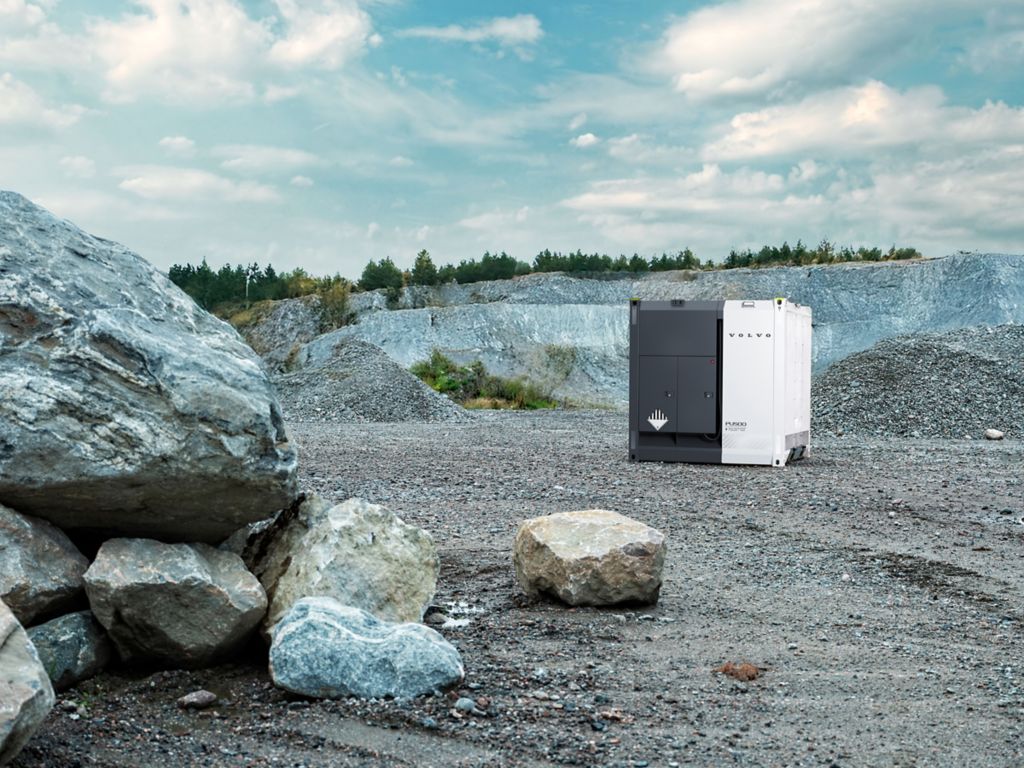
As shown in Figure 1, the BESS helps reduce the cost of running a power-hungry operation through peak shaving by lowering grid demand during peak periods. It can also help avoid costly grid upgrades.
Turning idle capacity into an asset
Quarries often build inventory and then wait for demand. If sales slow, production may pause for days, weeks, or longer. But even when operations stop, the site may still hold a sizable grid connection. In practice, that can mean paying for capacity that is barely being used.
This opens up another role for BESS, as shown in Figure 1. Instead of letting that grid connection sit idle, the BESS can help create value from it. With the right setup, the battery can use available grid capacity to provide ancillary services that help maintain grid stability, while also supporting other revenue-generating activities. This can create revenue opportunities from capacity that would otherwise go unused.
A practical fit for temporary and constrained sites
Not every quarry has a strong, permanent grid connection. Some sites are temporary by design and may operate for only a couple of years before activity moves elsewhere. In those cases, investing in a major grid upgrade may not make financial sense, and some sites therefore rely heavily on generators.
A BESS can just as easily support sites where the grid is weak, limited, or unavailable at the scale the operation needs. It can also help reduce dependence on diesel generators, which may lower CO2 emissions and local exhaust emissions on site compared with running generators continuously. Combined with on-site solar generation, a BESS may even eliminate diesel generators altogether and maximize the value of the installed solar system. This is especially relevant for operators working toward sustainability targets or seeking to improve local site conditions. Using a BESS instead of a diesel generator may also contribute to a quieter site environment which improves situational awareness around mobile equipment and reversing vehicles.
For operations that shift over time, mobile battery units can be moved as site layouts change, helping operators support different areas of the quarry without the need for permanent electrical build-out in every location.
In these environments, power quality can also be a challenge. Large and rapidly changing industrial loads can create unstable power conditions. A BESS can help stabilize that environment by smoothing the site’s power profile and supporting more consistent operation. This can result in more stable performance and reduce visible issues such as flickering lights in offices and break rooms.
An efficient solution
For quarry operators, the value of a BESS goes beyond energy storage alone. It can also mean reducing the cost of aggregates by lowering the cost tied to each ton produced.
Depending on the application, different solutions may fit different needs. For example, a portable unit such as the PU500 can support flexible on-site applications where equipment and power needs move around the quarry, while the larger PU2000 is better suited to site-level needs such as peak shaving and supporting grid-related services.
To learn more, visit our BESS product page or get in touch with us to discuss how a BESS could support your site.