Volvo Energy

Global

What happens when you put 70 MW of battery storage to work?

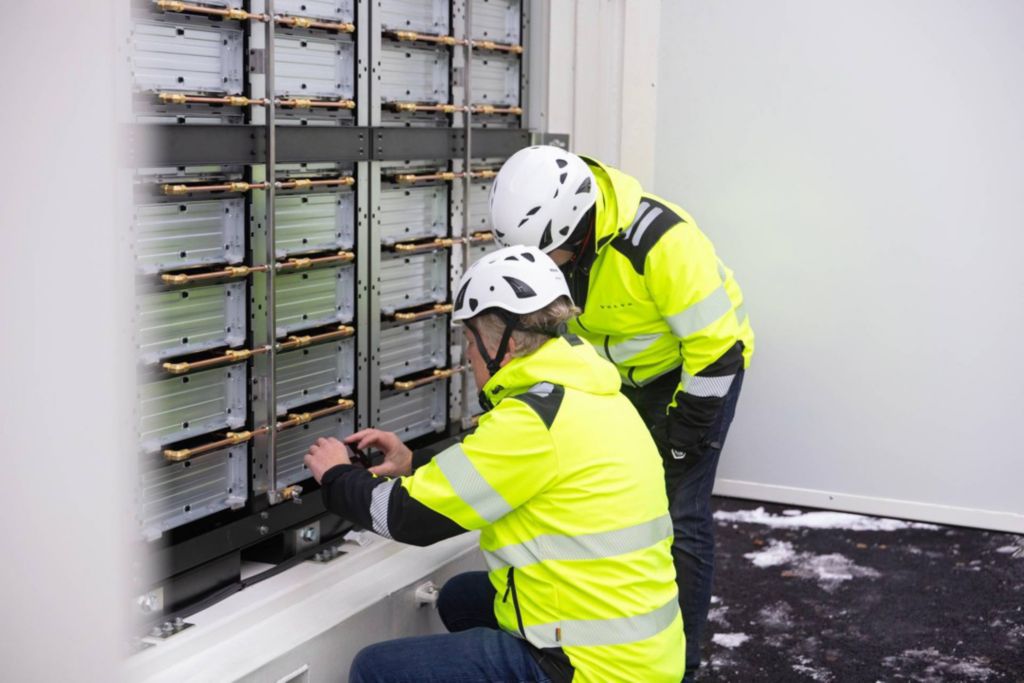
Behind Volvo Group’s announcement of Mariestad energy park, stands a team of technical experts who paved the way for 70 MW of power and 260 MWh of energy storage. This is the story behind those numbers. We met with Mark Ellis and Victor Bertilson to learn more about how they work to turn those numbers into a flexible energy system capable of responding to the changing needs of the industry, the grid and energy markets.
2 men in hard hats at work in front of a battery

70 MW of power/260 MWh of energy storage. The numbers are impressive. But behind them is much more than a large number of battery units.

Creating an energy park at this scale requires the integration of multiple technologies and capabilities — from battery systems, power electronics and thermal management to control systems, energy management, safety and cybersecurity.

Batteries installed

Turning stored energy into value

At its most basic level, a BESS stores energy and makes it available when needed. But the real value comes from being able to control when and how that energy is used. For an industrial site, electricity demand can vary significantly throughout the day. Charging electric trucks can create substantial peaks in power demand. Renewable energy production can fluctuate. Electricity prices change. And the capacity available from the grid can be limited. A BESS can help manage these different dynamics.

Volvo battery

Energy can be stored when electricity is available or less expensive and used when demand or prices are higher. Power can be made available during peaks, helping to reduce the need to draw additional capacity from the grid. The same storage asset can also support renewable energy integration, high-power vehicle charging, while also providing flexibility to the grid and potential new revenue streams through participation in local energy markets. This is where technology becomes critical.

Mark Ellis,  Head of BESS Technology at Volvo Energy
The real potential of storage comes from flexibility. At this scale, the opportunity is not simply to store energy, but to make energy work harder. We are building a system that can respond intelligently to the needs of the site, the local grid and the electricity market, while giving us a real-world platform to learn how large-scale storage creates value.

Engineering for industrial reality

Scaling up BESS technology also changes the engineering challenge. At industrial scale, performance must go hand in hand with safety, reliability and long-term operability. The battery system, cooling, power conversion, protection systems, controls and digital infrastructure all need to work together reliably. Safety cannot be an add-on; it needs to be engineered into the system from the beginning. The 10 MW BESS installation at the Volvo Trucks plant in Tuve is one example. Mariestad energy park takes the same technology and expertise into a significantly larger energy ecosystem. “Scaling to 70 MW changes the challenge. The battery, power conversion, controls, safety systems and energy management all have to operate as one integrated system. We are engineering that system not just to demonstrate the technology, but to operate it every day, learn from its performance and optimize how it delivers both grid support and commercial value.” says Mark.

This system-level engineering is what enables a BESS to move from being a storage asset to becoming an active part of an industrial energy system. That integration is critical because the value of a large-scale BESS ultimately depends not only on its installed capacity, but on how reliably and intelligently that capacity can be made available across different operating conditions and market opportunities.

Designing for what comes next

While Mark and his team focus on the technology inside the energy system, Victor Bertilson, Head of Construction & Infrastructure, looks at the challenge from the perspective of the Mariestad energy park site – how to create a flexible energy infrastructure that can evolve over time. 

Victor Bertilson, Head of Construction & Infrastructure at Mariestad site
That is one of the reasons the Mariestad initiative goes beyond installing battery storage. The energy park is intended to become a real-world environment where technologies can be connected, tested and developed together.

Learning from real-world operation

There is a difference between proving that technology works and understanding how it performs as part of a complex, commercially operating energy system. Mariestad creates the opportunity to do both: operate a large-scale energy asset that creates value, while using the experience and data generated through operation to improve the technology and its application.

The Energy Park will, at full capacity, provide a real-scale environment for exploring how battery storage interacts with production, charging infrastructure, renewable energy, the electricity grid and energy markets. It also creates an opportunity to learn from actual operations. “The real value of creating this environment is operational insight,” says Victor. “We can test solutions in real conditions, understand what works and use those learnings to develop the next generation of energy infrastructure as the battery cell factory becomes operational.”

As customers face many of the same challenges around electrification, energy costs, grid capacity and renewable energy, the energy park can also serve as a demonstration environment for technologies and business cases that are relevant to the wider transition.

From battery storage to an energy ecosystem

The shift towards electric transport requires changes to both the vehicles and the energy system around them. Production, charging, renewable generation, energy storage, grid capacity and electricity markets are becoming increasingly interconnected. That requires technology — but it also requires engineering expertise that can connect the different pieces into one functioning system. This is where the Mariestad energy park brings together several capabilities within Volvo Group.

The result is not simply 70 MW of installed power and 260 MWh of storage. It is an opportunity to develop a more flexible energy system, validate it at real scale and continuously improve how energy is managed.

Putting engineering power to work
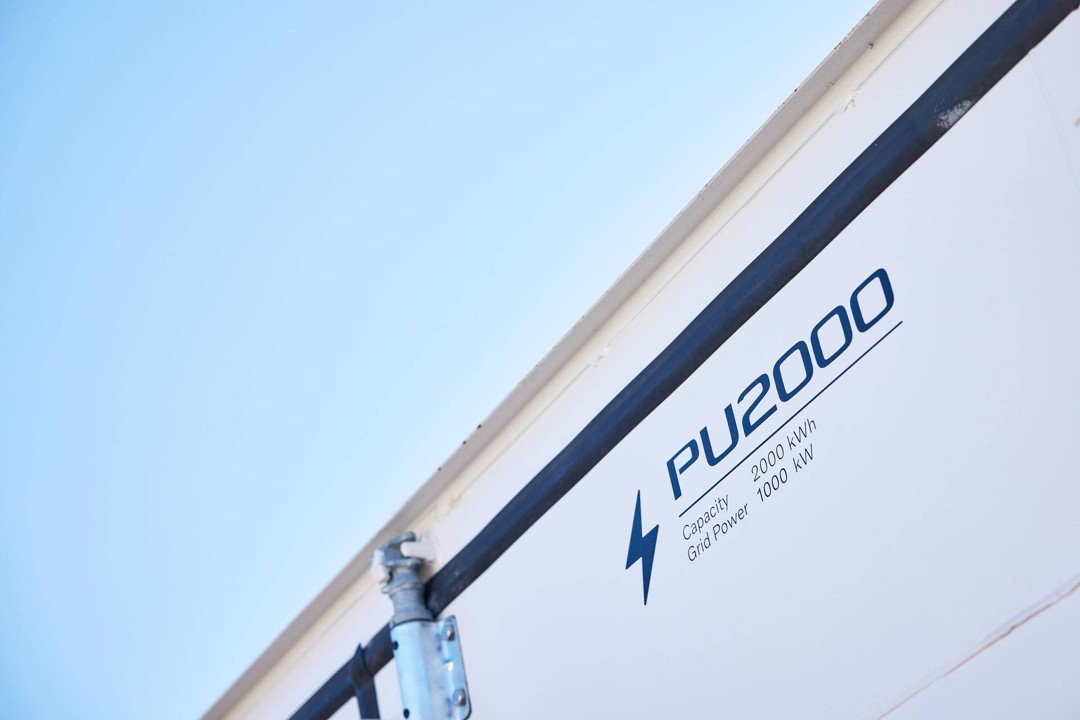
PU2000

For Volvo Energy, Mariestad is another step in putting its own technology to work. The same PU2000 technology that Volvo Energy offers to customers is being deployed within Volvo Group; first at Tuve and now as part of the much larger Mariestad initiative.

That creates a valuable feedback loop: develop technology, put it into operation, optimize real-world performance, and use that experience to continuously improve.

It is engineering in practice: putting technology to work at a real scale, creating value today and using the experience gained to build better energy solutions for tomorrow.